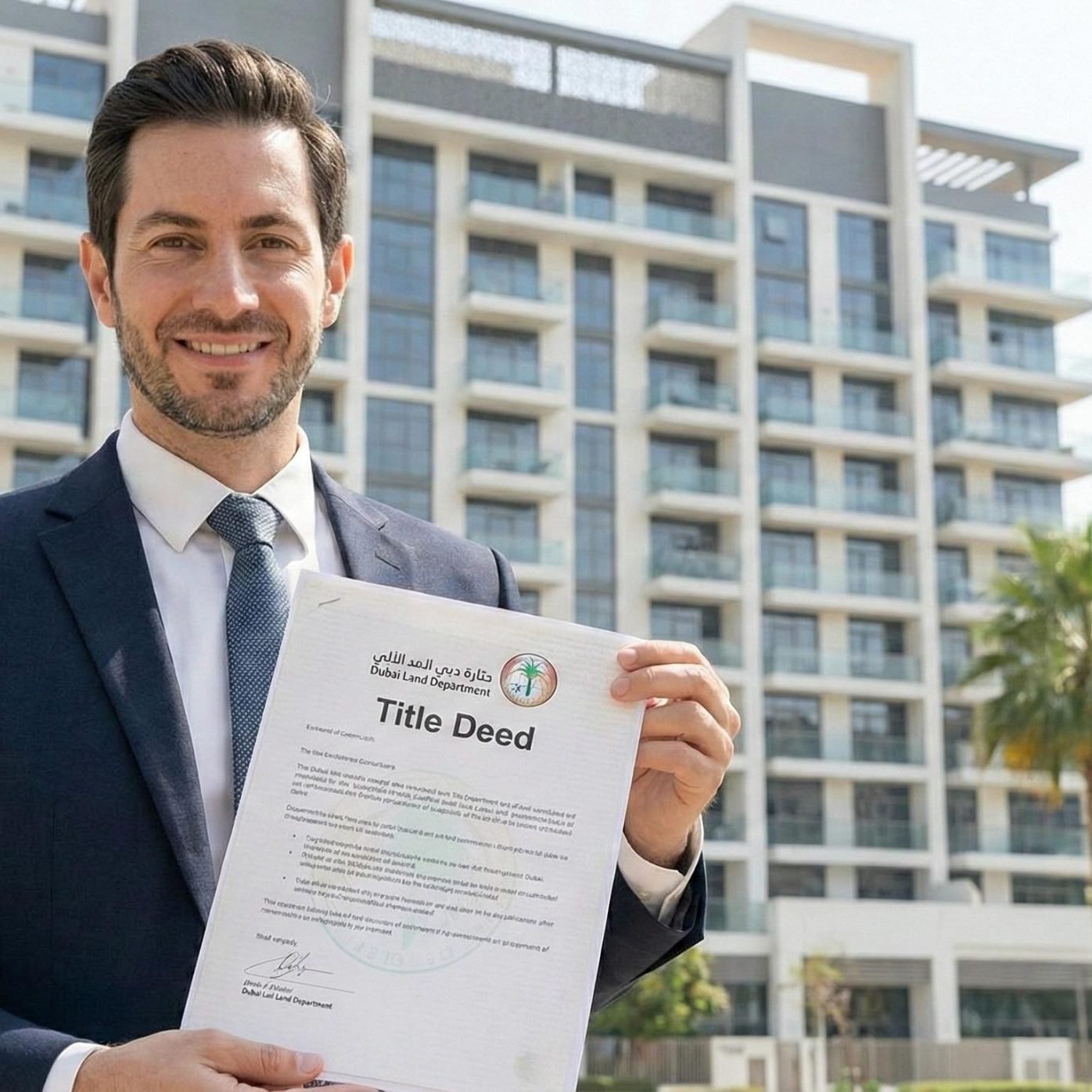
In Dubai, a property purchase becomes ownership when the transaction is registered with Dubai Land Department and the title record is issued or updated. A signed offer, booking form or broker memorandum is important, but it is not the final title transfer.
This walkthrough explains the standard journey for a completed resale property. Off-plan purchases, mortgaged sales, company buyers, gifts and inherited property use related but different procedures.
The process at a glance
- Verify the property, seller and broker.
- Agree the commercial terms.
- Sign the relevant sale agreement.
- Complete finance and mortgage settlement, if applicable.
- Obtain the developer’s clearance or NOC where required.
- Prepare payments and transfer documents.
- Complete registration through the approved channel.
- Receive and verify the title deed.
Step 1: Verify before negotiating
Confirm that the person offering the property is the registered owner or a legally authorised representative. Check the title-deed details, unit number, building or plot information, parking allocation and any mortgage shown in the transaction file.
Verify the broker’s credentials and the property advertisement. Dubai Land Department offers official enquiry services for title deeds, licensed brokers, developers, projects and permits. A screenshot from a listing portal is not a substitute for registry evidence.
Step 2: Agree the full commercial deal
Price is only one term. Record the deposit, transfer deadline, payment method, vacant-possession status, furniture, outstanding rent, service-charge adjustment, mortgage settlement and consequences if either party fails to complete.
If the property is tenanted, review the tenancy contract, Ejari information, payment status, deposits and notices. A buyer planning to occupy the unit should not assume that title transfer automatically creates immediate vacant possession.
Step 3: Sign the sale agreement
For a typical secondary-market transaction, the parties use the applicable DLD forms and sale documentation, commonly including Unified Form F. The agreement should reflect the negotiated terms accurately.
A buyer deposit is often provided at this stage under the agreed holding arrangement. Understand who holds it, when it may be presented or released and what happens if finance or the transaction fails. Do not hand over funds without a written receipt and matching contract terms.
Step 4: Complete mortgage work early
A financed buyer moves from pre-approval to property valuation and final loan approval. The bank must accept both the borrower and the selected property. Mortgage documents then need to be coordinated with the ownership transfer.
If the seller has a mortgage, the process may involve a liability letter, buyer-bank or cash settlement, blocking arrangements and formal mortgage release. This route takes more coordination than an unencumbered cash sale, so the contract timeline should reflect it.
Step 5: Obtain the developer NOC
For many completed properties in managed developments, the seller obtains a No Objection Certificate from the developer. The developer generally checks whether service charges and other property-account amounts are settled before clearing the transfer.
Buyers should still request evidence of the current service-charge position. The NOC process does not replace an independent review of the property condition, tenancy, title or contract.
Step 6: Prepare the transfer file
The exact file depends on the parties and property, but a standard individual transaction may involve:
- Original passports and Emirates IDs where applicable
- Valid sale agreement and DLD transaction forms
- Current title deed
- Developer NOC or clearance when required
- Mortgage documents, liability or release papers where applicable
- Payment instruments for the seller and fees
- Attested Power of Attorney if a party is represented
Names, passport numbers and unit details should match across every document. Check validity dates before the appointment.
Step 7: Calculate the official fees
Dubai Land Department’s current Property Sale Registration service lists a 2% seller fee and a 2% buyer fee based on sale value. It also lists additional title, map, knowledge and innovation charges. Service-partner fees are shown as AED 4,000 plus VAT when the sale value is AED 500,000 or more and AED 2,000 plus VAT below AED 500,000.
The contract should say who bears each amount. Market practice may place more of the overall cost on one party, but the written agreement and official completion statement control the cash required.
| Cost item | Official service-page position | Buyer action |
|---|---|---|
| Sale registration | 2% seller and 2% buyer | Confirm contractual allocation |
| Title and map charges | Fixed charges vary by property type | Request exact completion statement |
| Service-partner fee | Linked to the AED 500,000 threshold | Check VAT and payment method |
| Mortgage costs | Separate when finance is registered or released | Obtain the bank’s full schedule |
Fees and procedures can be updated. Confirm the live DLD page and the exact statement for your transaction rather than relying on an old estimate.
Step 8: Complete the ownership transfer
A standard transaction may be completed through an authorised Real Estate Registration Trustee Centre or an approved digital channel when the transaction qualifies. At the appointment, the parties or their representatives submit the documents, confirm the transaction and make the required payments.
DLD also describes a digital Dubai Now buy-or-sell route involving a sale request, signed agreement, transfer of the purchase amount and fees to the designated escrow account, and access to the title deed and receipt. Eligibility and practical steps should be checked on the live service.
Step 9: Receive and check the title deed
After successful registration, the buyer receives the updated electronic title record. Check the owner’s name, ownership share, property identifier, unit details and mortgage notation immediately. Save copies of the title, receipts, contract, NOC and payment evidence in a secure folder.
What changes for off-plan property?
An off-plan unit is generally registered in the provisional register through the relevant initial-sale process rather than transferred as a completed title in the same way as a ready resale. The developer handles project-linked registration and payments should follow the authorised project structure.
Verify the developer, project status, escrow details and registration of the initial sale. At completion, handover, final payment and title issuance follow the applicable project and DLD process.
Common reasons a transfer is delayed
- Expired passport, ID, NOC or bank letter
- Name or unit-detail mismatch across documents
- Outstanding developer or service-charge balance
- Mortgage-release timing not aligned with transfer
- Incorrect manager’s cheque or payment amount
- Power of Attorney not accepted for the intended act
- Contract deadline too short for the finance route
A safe completion mindset
Do not treat transfer day as an administrative formality. It is the point at which money, possession and legal title must align. Confirm the final figures, document validity, key handover, tenant status and title output before considering the transaction complete.
Editorial note: This explanation is general information. Procedures differ for mortgaged, off-plan, corporate, gifted and represented transactions. Use the live DLD service and qualified transaction advisers for the exact case.
Written for a useful decision.
This article is reviewed for clarity, originality, material claims and commercial transparency. Project-specific availability, prices, approvals and policies must be confirmed from current official documents.
Read our editorial policy →